
When facing an unplanned pregnancy, it’s crucial to have accurate education about all your options. If you are considering the abortion pill, it is important to know how it works. You should also understand its risks and what to expect. This knowledge can help you make the best decision for your future.
How Does the Abortion Pill Work?
The abortion pill consists of two different medications: mifepristone and misoprostol. This two-drug regimen works by breaking down the embryo’s connection to the uterus and causing the uterus to expel the developing embryo.


First Medication: Mifepristone
Mifepristone is taken first, usually in an abortion clinic. This medication blocks the hormone progesterone to the embryo.[1]
Progesterone is essential to keep the pregnancy going. It prepares and maintains the uterine lining that supports the developing embryo. Without a steady supply of progesterone, the embryo/fetus stops growing and eventually dies.[1]
Second Medication: Misoprostol
Misoprostol is taken 24-48 hours after mifepristone, often at home. This medication causes the uterus to contract, expelling the fetus and pregnancy tissue, ending the pregnancy.[1]
What to Expect When You Take the Abortion Pill
Here’s a typical timeline for the abortion pill:
- Mifepristone is taken first, followed by misoprostol 24–48 hours later.
- Cramping and bleeding start within 2-24 hours of taking misoprostol.[2] For most women, this process finishes within a day, but it can take longer for some. Everybody is different, so the exact timing varies.[3]
- Heavy bleeding may last a few hours, with lighter bleeding or spotting for 9–16 days. In some cases, spotting can continue for up to a month.[2]

When to Seek Emergency Care
Contact emergency medical services immediately if you experience[4]:
- Heavy bleeding
- Ongoing sickness: Severe stomach pain, fatigue, nausea, vomiting, and diarrhea for longer than 24 hours after taking misoprostol may indicate an infection or other complications
- Persistent fever
These signs could mean complications like infection or incomplete abortion, which need immediate medical treatment.

How Late Can You Take the Abortion Pill?
The abortion pill is only FDA-approved for pregnancies up to 10 weeks gestation (or 70 days or less since the first day of your last menstrual period).[1]
If you take the abortion pill later in your pregnancy, the risk of serious complications increases significantly. This is why determining accurate gestational age and viability through ultrasound is so important before considering any abortion procedure.
How Effective is the Abortion Pill?
The abortion pill results in complete abortion in about 93% of pregnancies up to 10 weeks from the last menstrual period.[5] However, this means that it can fail in about 7% of pregnancies up to 10 weeks.
Women may need additional treatment, which may include surgical intervention.

Abortion Pill Risks and Side Effects
Common Side Effects
Most women experience some side effects after taking the abortion pill, including[2]:
- Bleeding that can last up to a month
- Headaches
- Nausea and vomiting
- Diarrhea and digestive pain
- Chills
- Fever
- Abdominal cramping
Serious Complications
While rare, serious complications can occur and may include:
- Severe allergic reaction to the medication[6]
- Hemorrhaging (excessive bleeding)[5]
- Incomplete abortion (remaining pregnancy tissue)[4]
- Infection[2]
Understanding these risks and having access to emergency medical care if complications arise is important.
Emotional & Psychological Risks
- There is little information about how abortion affects women or the impact of seeing identifiable fetal parts expelled from your body
- However, available research confirms an increased risk of clinical depression, substance abuse, anxiety, suicidal thoughts and behavior[7][8]
Long-Term Health Considerations
- Carrying a first pregnancy to term before the age of 30 gives a measure of protection against future breast cancers[9]
- Delivering before 32 weeks gestation is associated with an increased risk of future breast cancer, this includes induced abortion[10]
Impact on Future Pregnancies[11][12][13][14][15]:
- Research indicates increased risk of preterm birth in subsequent pregnancies
- Studies show potential link to low birth weight in future babies
- Risk may be higher with multiple abortions
- Discuss personal risk factors with healthcare provider

Can I Get Abortion Pills Over the Counter?
No, you cannot get abortion pills over the counter at any pharmacy or retail location. A provider or physician certified to prescribe abortion pills must give a prescription. This requirement exists because medical abortion requires proper medical supervision and follow-up care.[16]
The FDA allows some pharmacies to dispense the abortion pill. This is only with a prescription from a certified provider.[16] The prescription requirement ensures that:
- Your pregnancy is confirmed and properly dated
- You don’t have medical conditions that make the abortion pill unsafe for you to take
- You receive proper instructions for taking the medications
- Follow-up care is available to ensure the procedure is complete
Can I Order the Abortion Pill Online?
The FDA strongly advises against ordering abortion pills online from uncertified sources.[17] Many online abortion pill providers operate overseas, so the pills they offer may not meet FDA safety standards.
Risks of Online Abortion Pills
Online abortion pills from uncertified sources could be:
- Counterfeit medications with unknown ingredients
- Expired or improperly stored
- Tampered with
- Incorrect dosages
- Completely fake with no active ingredients
These risks can lead to serious health complications, including incomplete abortion, undiagnosed ectopic pregnancy (which can be life-threatening), severe bleeding, infection, or continued pregnancy.

Is the Abortion Pill Legal in Wisconsin?
Yes, the abortion pill is legal in Wisconsin.[18] However, we recommend receiving an ultrasound before taking the abortion pill. Keep reading to learn why.
Why You Need an Ultrasound Before an Abortion
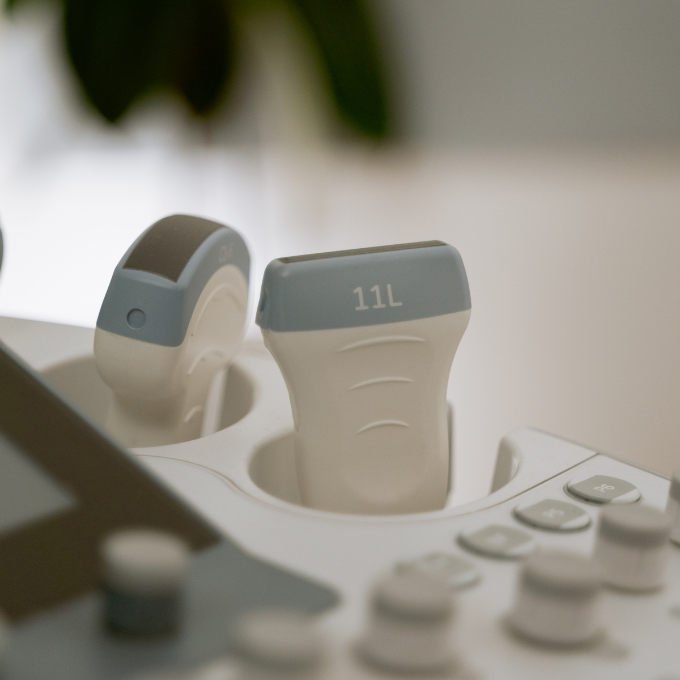
Before considering any abortion procedure, including the abortion pill, it’s crucial to receive an ultrasound.
An ultrasound provides the information needed to make a safe decision by:
Confirming the Pregnancy
Home pregnancy tests can sometimes show false positives because of certain medications, medical conditions, or user error. An ultrasound provides definitive confirmation of pregnancy.
Determining Gestational Age
Accurate dating is essential because the abortion pill is only FDA-approved for pregnancies up to 10 weeks. An ultrasound gives the best estimate of gestational age. This may be different from calculations based on your last period.
Determining Viability
An ultrasound determines if your pregnancy is viable and growing inside the uterus by detecting the fetal heartbeat. If it cannot be detected, it may indicate that a miscarriage (spontaneous loss of a pregnancy) is occurring. This requires alternative medical care.
This could also mean that the pregnancy is growing in another location, which is known as ectopic pregnancy. This is a life-threatening situation that requires emergency care.
*Important note: Please be aware that this article is not meant to substitute for medical advice or treatment. The purpose of our limited ultrasound exams is to identify a pregnancy inside the uterus, detect the fetal heartbeat, and estimate how far along you are. If there is no detectable heartbeat, it may indicate a miscarriage or ectopic pregnancy is occurring. If we cannot detect a fetal heartbeat during your appointment, we will provide appropriate referrals for follow-up care and treatment.
Considering the Abortion Pill in West Bend, Wisconsin? Get the Facts at Seed of Hope Center.
When your pregnancy test comes back positive, it can be easy to panic. Don’t let fear make the final decision for you. Get the care and support you deserve at Seed of Hope Center. We provide free pregnancy resources, so you can make an empowered decision about your unplanned pregnancy:
Our free services include:
- Free pregnancy tests – Confirm your pregnancy with medical-grade testing
- Free ultrasounds – Determine gestational age and confirm pregnancy viability
- A safe, non-judgmental place to explore your pregnancy options and process your emotions
- Compassionate support from trained staff who understand what you’re going through
- Resource connections to help you access additional support services
- Education about all your options including parenting and adoption resources
Give us a call at 262-338-1205 or schedule your appointment online. All services are confidential and free of charge!
Blog Articles Related to the Abortion Pill

Missed Period Pills: What to Know Before Taking Them
If your period is late and you're worried about an unplanned pregnancy, you may have heard about "period pills" or "missed period pills." These terms have gained attention recently, but what exactly are they, and what should you know before considering them? At...

What to Expect If Taking the Abortion Pill: A Comprehensive Guide
Facing an unplanned pregnancy can feel like a lot to handle. You might be considering the abortion pill as an option, but it’s important to know what’s involved. This medical process has risks and side effects you should understand before deciding. This guide explains...

Everything You Need to Know About At-Home Abortions
As we deal with reproductive health in 2025, it is important to discuss sensitive topics clearly and carefully. At , we support women at every step of their journey. We provide caring guidance, clear information, and a safe space for exploration. The...
Please note: Seed of Hope Center provides education and pregnancy services but does not perform or refer for abortion procedures. We are committed to ensuring you have complete, medically accurate information to make the best decision for your circumstances.
Sources
- FDA. (2025, February 11). Questions and Answers on Mifeprex. U.S. Food and Drug Administration. https://www.fda.gov/drugs/postmarket-drug-safety-information-patients-and-providers/questions-and-answers-mifeprex
- U.S. National Library of Medicine. (2024, November 15). Mifepristone (Mifeprex). MedlinePlus. https://medlineplus.gov/druginfo/meds/a600042.html
- Mayo Clinic. (2025, February 1). Mifepristone (oral route). https://www.mayoclinic.org/drugs-supplements/mifepristone-oral-route/description/drg-20067123
- Mayo Clinic. (2022, July 29). Medical Abortion. https://www.mayoclinic.org/tests-procedures/medical-abortion/about/pac-20394687
- Food & Drug Administration. (2016, March). Mifiprex Clinical Studies. https://www.accessdata.fda.gov/drugsatfda_docs/label/2016/020687s020lbl.pdf
- Shin, Hyun Joo, et al. “Anaphylactic Shock to Vaginal Misoprostol: A Rare Adverse Reaction to a Frequently Used Drug.” PubMed Central (PMC), 9 Aug. 2018, www.ncbi.nlm.nih.gov/pmc/articles/PMC6137020
- Fergusson, D. M., Horwood, L. J., & Ridder, E. M. (2005, September 22). Abortion in young women and subsequent mental health. Association for Child and Adolescent Mental Health. https://acamh.onlinelibrary.wiley.com/doi/full/10.1111/j.1469-7610.2005.01538.x
- Coleman, PK. Abortion and mental health: quantitative synthesis and analysis of research published 1995–2009. British Journal of Psychiatry. 2011;199(3):180-186. https://pubmed.ncbi.nlm.nih.gov/21881096/
- Evans, D., Harkness, E., Howel, S., Woodward, E., Howell, A., & Lalloo, F. (2017, November 7). Young age at first pregnancy does protect against early onset breast cancer in BRCA1 and BRCA2 mutation carriers. Breast Cancer Research and Treatment. https://pmc.ncbi.nlm.nih.gov/articles/PMC5807493/
- Razavi, M., Sepidarkish, M., Maleki-Hajiagha, A., Vesali, S., Almasi-Hashiani, A., Najdi, N., & Esmailzadeh, A. (2023, January 1). Preterm Birth and Breast Cancer Risk: A Systematic Review and Meta-Analysis. Asian Pacific Journal of Cancer Prevention: APJCP. https://pmc.ncbi.nlm.nih.gov/articles/PMC10152877/
- American College of Obstetricians & Gynecologists. (2019). Pelvic inflammatory disease (PID). https://www.acog.org/womens-health/faqs/pelvic-inflammatory-disease
- Swingle, H. M., Colaizy, T. T., Zimmerman, M. B., Morriss, F. H. (2009). Abortion and the risk of subsequent preterm birth: A systematic review with meta-analyses. The Journal of Reproductive Medicine, 54(2), 95–108. https://pubmed.ncbi.nlm.nih.gov/19301572/
- Shah, P. S., Zao, J. (2009). Induced termination of pregnancy and low birthweight and preterm birth: A systematic review and meta-analyses. British Journal of Obstetrics & Gynaecology, 116(11), 1425–42. doi: 10.1111/j.1471- 0528.2009.02278.x. https://pubmed.ncbi.nlm.nih.gov/19769749/
- Moreau, C., Kaminski, M., Ancel, P.Y., Bouyer, J., et al (2005). Previous induced abortions and the risk of very preterm delivery: Results of the EPIPAGE study. Br J Obstet Gynaecol,5,112(4):430–37. https://pubmed.ncbi.nlm.nih.gov/15777440/
- Ancel, P.Y., Lelong, N., Papiernik, E., Saurel-Cubizolles, M.J., Kaminski, M (2004). History of induced abortion as a risk factor for preterm birth in European countries: Results. https://pubmed.ncbi.nlm.nih.gov/14998979/
- FDA. (2019, July). Prescribing Information for Mifeprex. U.S. Food & Drug Administration. https://www.accessdata.fda.gov/drugsatfda_docs/label/2019/022348s014lbl.pdf
- Center for Drug Evaluation and Research. (2025, January 17). Mifeprex (Mifepristone). U.S. Food and Drug Administration. https://www.fda.gov/drugs/postmarket-drug-safety-information-patients-and-providers/mifeprex-mifepristone-information
- Wisconsin State Legislature. (2026, May). Key Abortion Restrictions in Wisconsin. https://docs.legis.wisconsin.gov/misc/lc/issue_briefs/2026/health/ib_overview_of_abortion_laws_msk_2026_05_06